Tatiana Proskouriakoff: The Maya Were Telling Us Their Stories
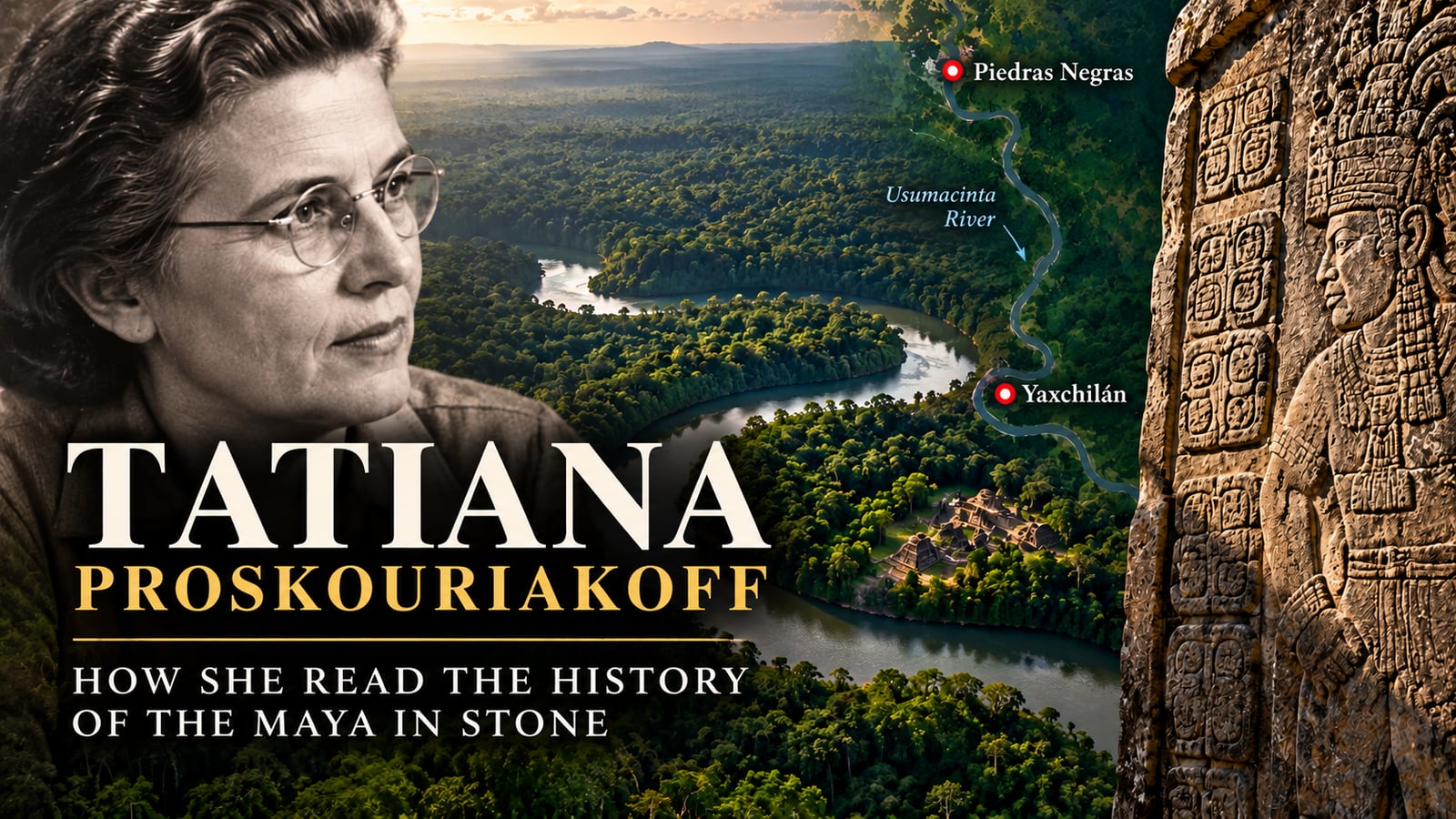
Editorial illustration of Tatiana Proskouriakoff and the Maya world. The depicted landscape and site markers are artistic, not a geographically accurate map.
When I visited Yaxchilán, deep in the jungles of Chiapas, I didn't know that farther along the Usumacinta River, at Piedras Negras, a woman had found one of the keys to understanding Maya history.
Her name was Tatiana Proskouriakoff.
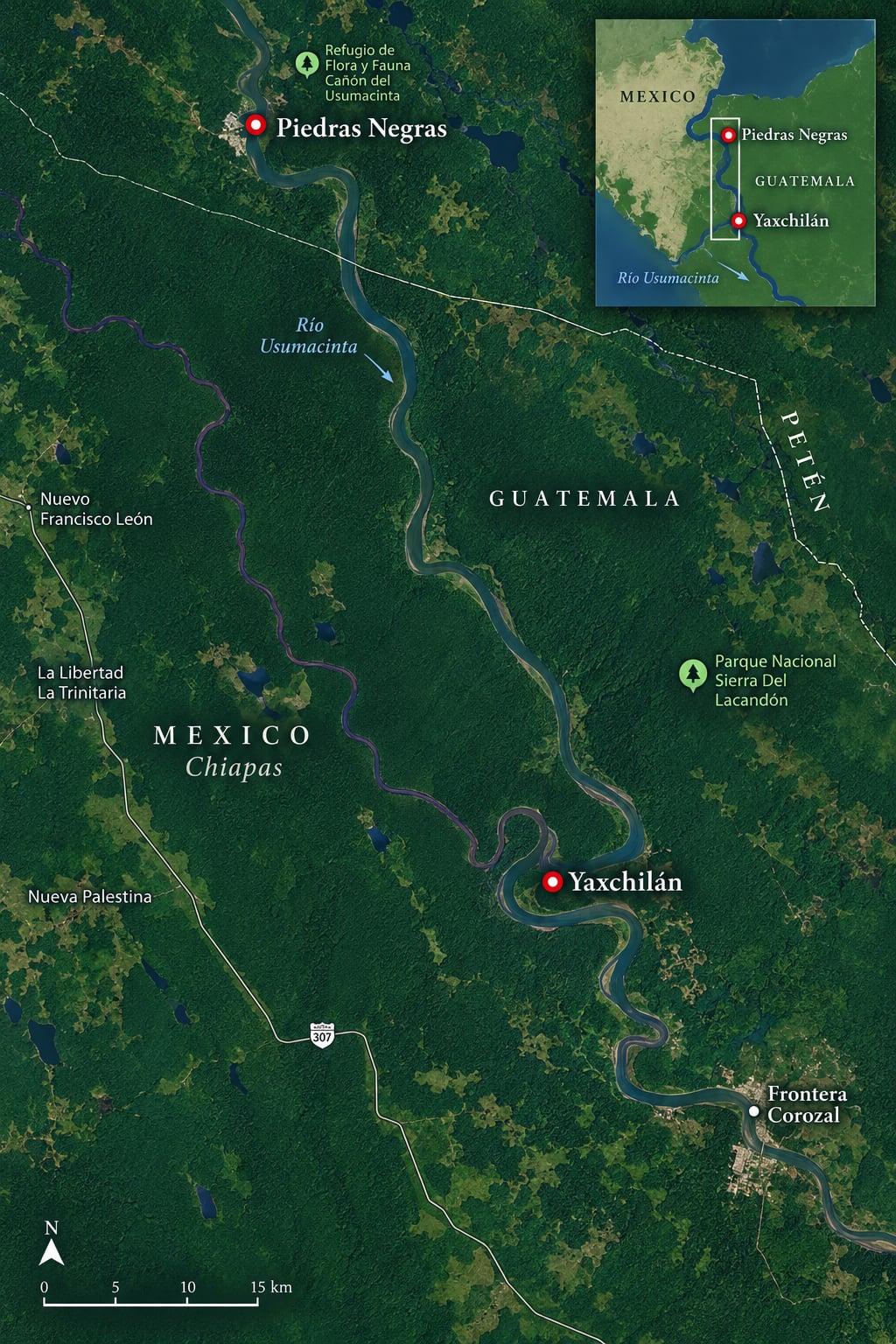 Illustrative map of the Usumacinta region, showing Piedras Negras north of Yaxchilán. AI-generated artwork based on map references; not a survey-accurate map.
For decades, researchers had studied Maya monuments covered in elaborate carvings and dates. The Maya were accomplished astronomers and mathematicians, and many scholars believed their inscriptions dealt mainly with calendars, astronomy, and religious ceremonies.
But Tatiana noticed something strange.
Certain dates appeared in patterns, separated by intervals that suggested something surprisingly familiar: human lifetimes.
What if these weren't just ceremonial dates? What if they recorded the lives of actual people?
Tatiana was born in Siberia in 1909 and trained as an architect, not a specialist in ancient writing. Her work reconstructing Maya buildings eventually led her to study the monuments of Piedras Negras.
In 1960, she published Historical Implications of a Pattern of Dates at Piedras Negras, Guatemala, showing that the inscriptions recorded events in the lives and reigns of Maya rulers.
The figures carved into those monuments weren't simply ceremonial images. They represented people whose histories could begin to be reconstructed.
Her discovery, alongside the work of other scholars, helped transform our understanding of Maya civilization.
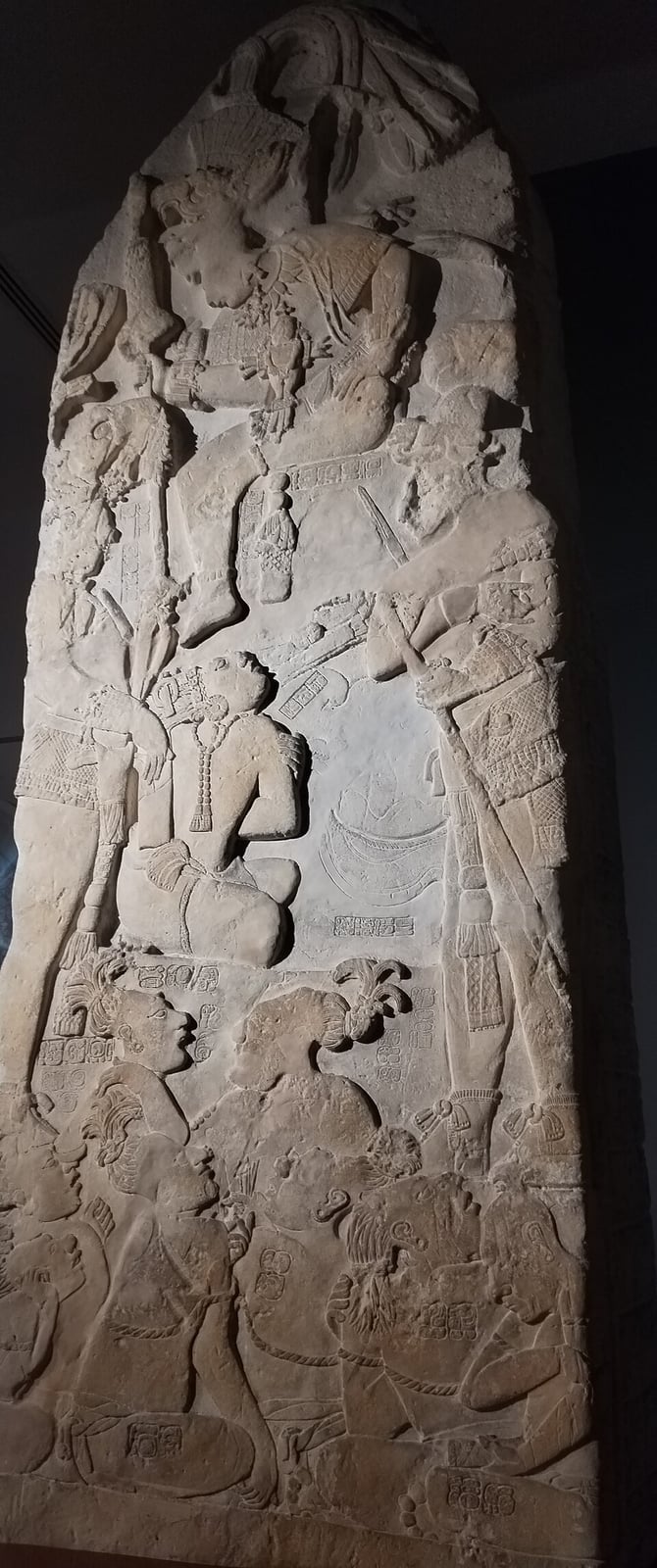 Piedras Negras, Stela 12. Photograph: Konjiki1, Wikimedia Commons, CC BY 4.0.

And here's what I find remarkable.
Tatiana didn't uncover a forgotten city or discover a hidden manuscript. She examined evidence that had been studied for decades and recognized a pattern others had missed.
The Maya had been telling us their stories all along.
We just needed someone to notice.
What she did is the thing I picked up by accident in tech — reading the story out of a noisy system.
Piedras Negras gave up its answer; most sites never do, which is the trouble with archaeology that finds the solution first.
At Tarxien I made the opposite case: that there is a line where the evidence ends and interpretation begins.
📬 Enjoyed this article?
Subscribe for the stuff that doesn't make it onto the blog — half-finished ideas, what I'm reading and listening to, behind-the-scenes notes, and the occasional rabbit hole. No spam, just things worth your time.