Yaxchilán
Sailing down the Usumacinta River is already an experience in itself. It was almost an hour's journey by boat, with the river running high and the jungle closing in on both sides, until suddenly the dock appears. As soon as I set foot on the first step, they warned us: "there are more than 60 steps submerged right now". That alone made me imagine how monumental the original climb must have been.
The most intriguing part is what you don't see. We were told that beneath the water there are remains of structures suggesting a bridge to Guatemala, something that if confirmed would be a brutal discovery. And in fact, you just have to look at the other side: on the Guatemalan shore you can make out mountains that don't look natural, but rather pyramids covered in vegetation that are still waiting to be explored.
The entire jungle is dotted with ruins that can barely be distinguished among roots and vines. Walking there is like entering a space where nature and the city compete but never cancel each other out.
Yaxchilán is also unique for its omega-shaped layout (Ω). That configuration gave it absolute control over the river and trade routes, which explains its power in the region. It wasn't just a ceremonial center: it was a strategic node that united territory, commerce, and war.
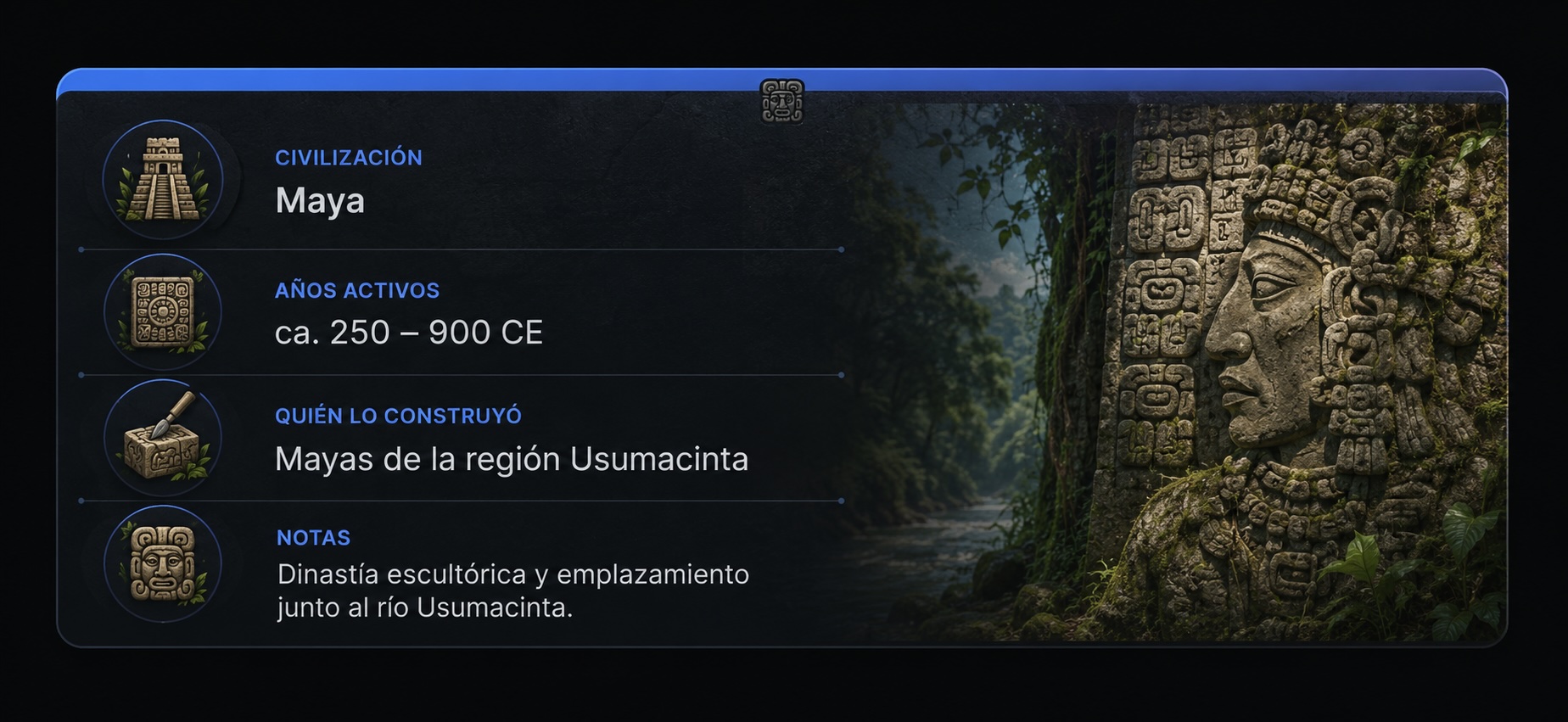
If Bonampak is famous for its murals, Yaxchilán is known for its carved lintels with scenes of bloody rituals and dynastic politics. Seeing them in situ, in the middle of the humid jungle with the sound of the river in the background, is like being present at the ceremony itself.
More than an archaeological visit, arriving at Yaxchilán feels like crossing into another time. A city that still throbs beneath the jungle and reminds you how much there is left to discover.
Final note: that day my 100% black outfit was a miscalculation. Between the humidity and heat, mosquitos attacked me as if I were part of the menu. The guide laughingly told me that, dressed like that, they surely mistook me for a jaguar… or a clueless monkey walking among the ruins. 🦟🐆🐒
Bonampak was the other side of that same Usumacinta trip — the other face of the Maya coin.
Yaxchilán is exactly the kind of stone-and-story that survives when everything else dissolves.
A thousand years later, the carved lintels are still speaking to whoever shows up — the creation outliving the creator.
📬 Enjoyed this article?
Subscribe for the stuff that doesn't make it onto the blog — half-finished ideas, what I'm reading and listening to, behind-the-scenes notes, and the occasional rabbit hole. No spam, just things worth your time.