A Stone for Tomorrow: Why We Should Leave a Real Time Capsule
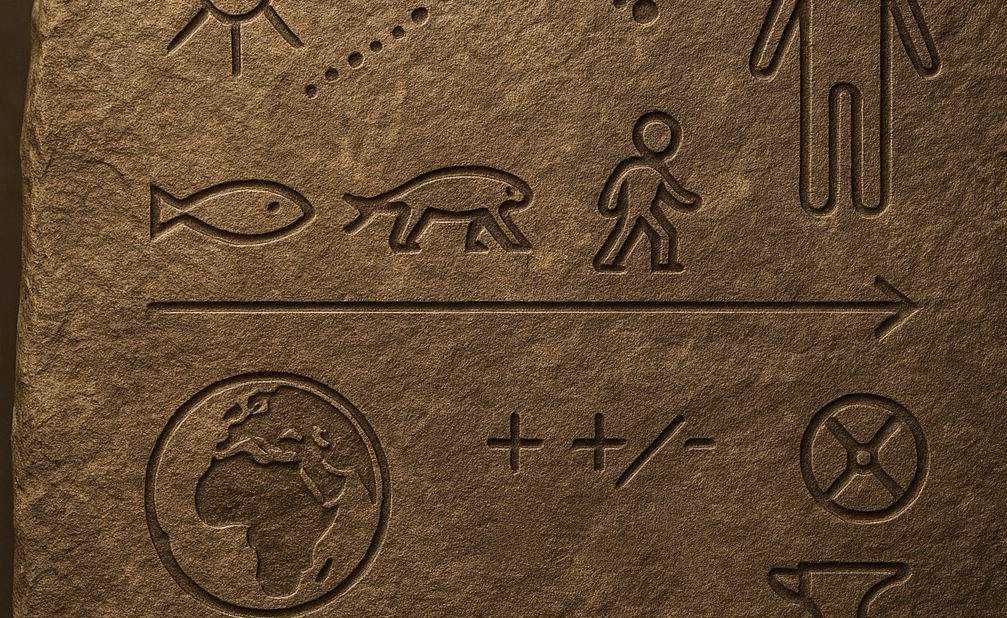
"The sunset of mankind. The twilight of the human race." — H.G. Wells, The Time Machine (1895)
H.G. Wells imagined a traveler leaping into the far future, finding the ruins of civilization still standing but stripped of meaning. Monuments remained. Knowledge didn't. It's a scene from fiction, but also a mirror of our reality.
Because if we vanished tomorrow, what would survive of us?
Paper dissolves. Electronics corrode. Concrete crumbles. Plastics don't last, they just smear themselves into the soil as toxic glitter.
What actually lasts for millions of years? Stone. Pottery. The radioactive fingerprints of our worst mistakes. That's it.
That's our "legacy" if we disappear.
The Proof Is Already Around Us
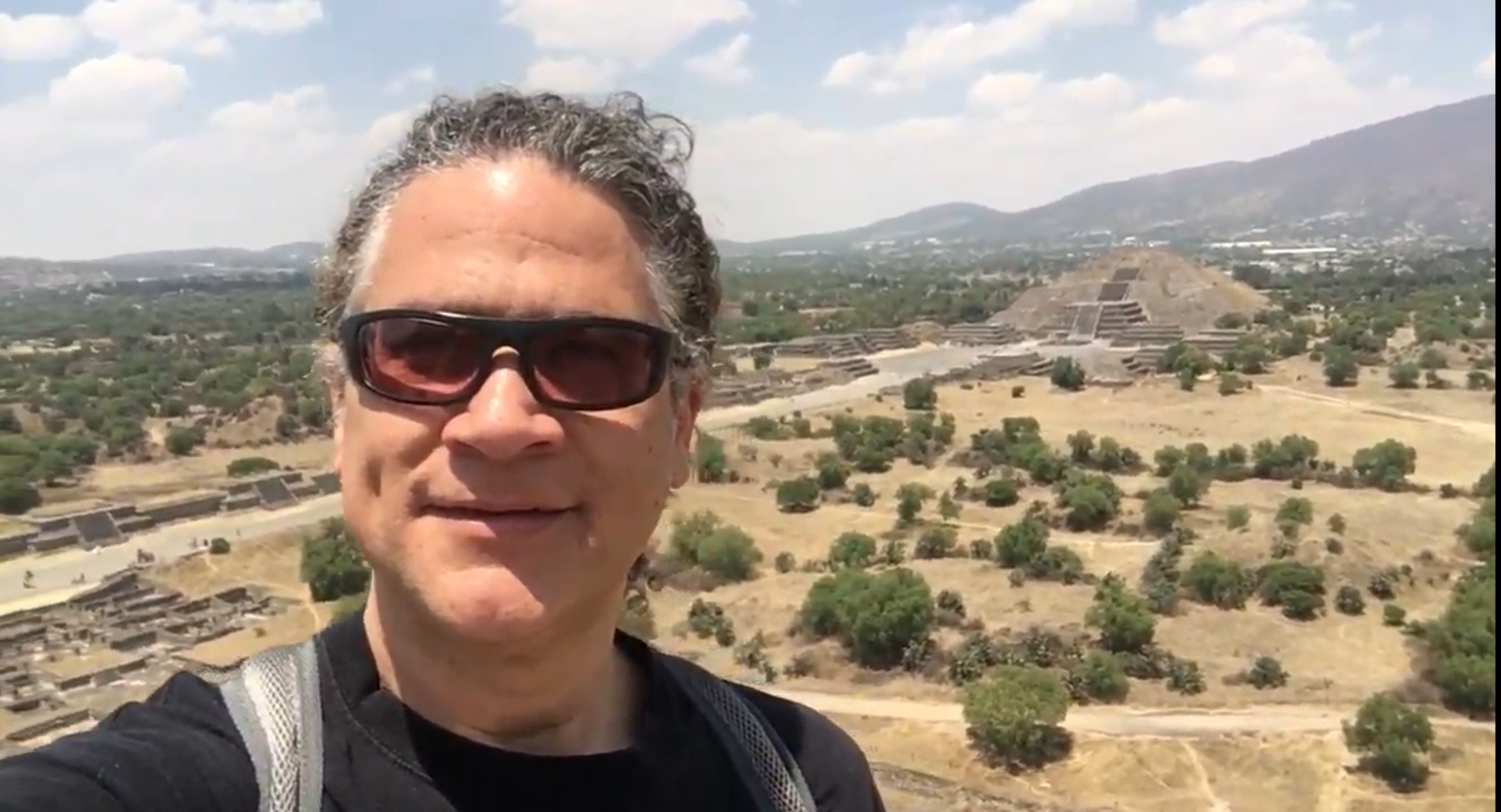 Me at Teotihuacan
Look at what we already inherit from the deep past:
- The Pyramids of Egypt — colossal, timeless, and yet even Egyptians who lived a thousand years later saw them as mysteries of the ancients.
- Stonehenge — still standing, but we can only guess whether it was a calendar, a temple, or something else entirely.
- Göbekli Tepe — 12,000 years old, older than farming itself, covered in intricate carvings... and no one knows who built it or why.
- Teotihuacan — when the Aztecs discovered it, the city had already been abandoned for centuries. They named it "the place where the gods were created", but had no idea who actually built it.
Stone survives. Meaning does not.
And that's the catch: the monuments lasted, but the instructions, the context, the point vanished.
The Hint of Past Collapses
There's also evidence that this has already happened:
- Vast cities like Mohenjo-daro and Harappa collapsed, leaving ruins and unanswered questions.
- Libyan desert glass in the Sahara looks like the aftermath of an impossible heat event — whether meteor, comet, or something else, it scorched the land like a bomb.
- Geological layers show spikes of iridium, nano diamonds, and melt glass — signs of cataclysms that erased entire ways of life.
- Myths from the Mahabharata to flood legends in every culture describe weapons, fires, and waters that reset the clock.
We don't have to call it "nuclear war."
But the pattern is clear:
Civilizations rise, collapse, and leave behind stone puzzles that baffle the next round of humans.
Humanity's Attempts at Time Capsules
We've tried leaving messages before:
- Mesopotamian kings buried foundation stones bragging about their empires.
- The Rosetta Stone accidentally became a decoder ring for an entire lost language.
- The Voyager Golden Records float in the void with Chuck Berry and diagrams of hydrogen.
- The Georgia Guidestones tried to be a manual for future survivors, but now they're rubble.
- Nuclear waste engineers are designing giant long-term nuclear waste markers meant to scream "do not dig here" for 10,000 years.
All interesting. All clever.
But notice something: they're either warnings or monuments.
Not primers. Not the actual jump-start kit you'd want if you were clawing your way back after a collapse.
The Gap We're Leaving
Imagine humanity gets wiped down to a few scattered groups. Fast-forward 50,000 years. New hands pick through our ruins.
What do they find?
TikTok servers? Gone. Skyscrapers? Rubble. Hard drives? Sand.
And here's the unsettling thought: maybe this isn't hypothetical.
Maybe this exact cycle already played out before us.
Archaeology is full of burn marks and mysteries — civilizations that flourished, then collapsed, leaving only fragments. The pattern is clear: stone lasts, context doesn't. And when the next round of humans shows up, they inherit the puzzles without the instructions — just like we did.
The Head-Start Stone I Propose
If I had one slab of granite to carve — just one shot — here's what I'd put on it:
The Frame
- A star map, so they know where they are.
- The continents of Earth, so they know what home looks like.
- A timeline of life: sea → dinosaurs → humans → collapse.
The Basics
- Fire: stick + stick = flame.
- Water: boil to drink.
- Seeds + sun + water = food.
- Animals worth domesticating: cow, goat, chicken.
The Tools
- Numbers, primes, basic geometry.
- Wheel, lever, pulley — the simple machines.
- Ore + fire = metal.
The Warning
- A mushroom cloud carved into stone.
- A skull.
- The clearest line I can leave: "Small fire good. Big fire destroys."
Not philosophy. Not vanity. Just a starter pack for civilization.
Why It Matters
✅ The pyramids survived. ✅ Stonehenge survived. ✅ Göbekli Tepe survived. ✅ Teotihuacan survived.
But the instructions didn't.
We love to think we're permanent. We're not.
What's permanent is stone + story.
So if we really care about whoever comes after us — not as gods, not as ghosts, but as fellow humans across time — then we owe them more than a warning.
We owe them a head start.
Seventeen years after publishing a book, someone downloaded a copy — and it made me think about exactly this.
Bonampak's murals are stone-and-story still working, a thousand years on.
My first book is already lost media — paper and 1997 internet were not built for the long now.
📬 Enjoyed this article?
Subscribe for the stuff that doesn't make it onto the blog — half-finished ideas, what I'm reading and listening to, behind-the-scenes notes, and the occasional rabbit hole. No spam, just things worth your time.