The Story Behind My First Book: CGI Programming in Visual Basic
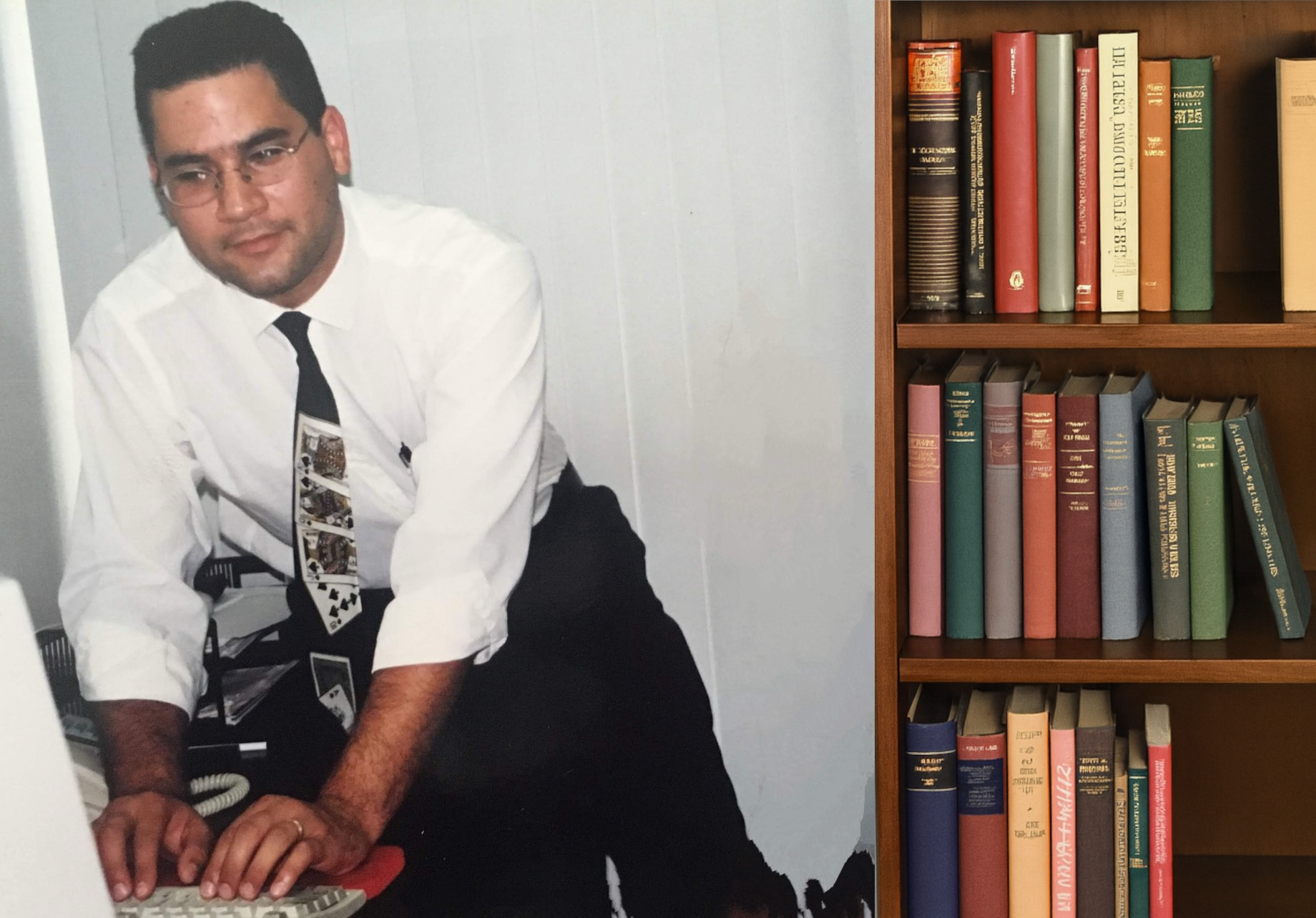 Alco coding. Circa 1998
The 1990s Internet was very different. I guess we never knew this cool "computer thing" would become what it is today. Nobody really knew what it was for, and most experts and analysts said it would become "the new mainframe." In any case, there's very little trace of those days—references are scarce. I'm relying on memory, and the order of events might be a bit off… but everything happened.
⸻
I got started on the Internet really early.
Sometime in 1995, I was working at a pharmaceutical company, doing network operations—basically help desk support—for internal users connected to IBM AS/400 mainframes via dumb terminals. That was my first formal job in tech. Everything I touched there was different from what I was learning in college.
At work, it was all mainframe computing, T1 WAN lines, and token ring architecture. In college, we ran everything on VAX systems and focused on programming languages. (VAX, for the curious.)
I've always been curious. I devoured magazines, and one of my favorites was Visual Basic Programmer's Journal (VBPJ). We didn't have real Internet access at work, but we had a CompuServe subscription. Every chance I got, I'd fire up the 9600 baud modem, connect to CompuServe, launch the Chameleon web browser, and look up the occasional web addresses mentioned in the magazines—which were very few.
That's how I discovered a Windows web server called HTTPd, written by Bob Denny. According to his Wikipedia page:
"Denny is also noted for developing the first web server software for Microsoft Windows 3.1, 95, and NT 4 (Windows HTTPd), as the inventor of the Windows Common Gateway Interface which allows Visual Basic to be used as a web server back-end language…"
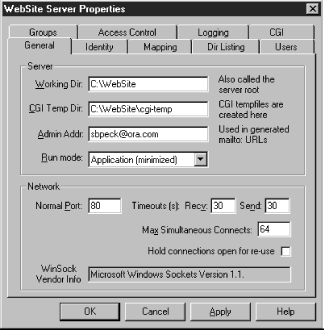 Source: https://docstore.mik.ua/orelly/web/webnut/ch26_01.html
Back in 1995, websites had almost no interactivity. I remember when you couldn't even change the background color of a page. But one thing you could do was submit a form and have the server do "something." That fascinated me.
That "something" turned out to be CGI—the Common Gateway Interface—a method that let the web server execute programs in response to browser input. Most CGI scripts were written in Perl or C and ran on UNIX servers. But I was a Windows guy, and UNIX felt like another planet.
Bob Denny's HTTPd changed everything. It let Visual Basic developers:
- Run a web server on Windows 95
- Execute CGI scripts written in Visual Basic 🔥
None of this was for school or work—it was for me. I was learning just for the sake of it. I'd talk to friends at college about the things I was building, and through those conversations, I landed my first post-college job in 1996—working at an Internet Service Provider as their "web guy."
I had a lot of creative freedom there. First thing I did? Made sure we got a copy of Bob Denny's web server. I knew that if I could write web apps in Visual Basic, the sky was the limit.
 Visual Basic 4 Splash Screen
I almost missed the opportunity—Microsoft was releasing IIS around that time, and it didn't support CGI the way I needed. But I convinced my boss, and we got the server.
I built so much stuff. I was part of a mailing list called VISBAS (creative name, huh?), all about Visual Basic. I posted often—usually about how I was using VB to build web apps backed by Access databases, and client-server desktop apps that talked to CGI scripts on the server.
Not long after IIS came out, the CGI Win library was refactored to work on any windows web-server via CGI-BIN. Here's the library if you're curious https://github.com/louiscrocker/CGI4VB
A Little Side Story
By this point, I'd been doing magic for about six years. In the magic world, when magicians tour, they often contact local clubs and offer lectures—live performances of their own routines, followed by explanations and sales of props or "lecture notes." I had about a dozen of these, neatly spiral-bound.
Why mention this?
Because in that world, sharing ideas is part of the culture—even if it's just photocopied notes. Presentation isn't the point. The point is transferring knowledge. That spirit heavily influenced how I approached my book.
From Posts to Pages
One day, after answering so many questions on the VISBAS list, I posted: "Hey, if I write a short book about this, would anyone be interested?" To my surprise, about 10 people responded immediately with "YES!" Game on. 🎯
I started writing, following the style of the many programming books I'd read. Midway through, Visual Basic 5 was released—with support for ActiveX controls—so I added an appendix explaining how to use those to call your CGI scripts from your own desktop applications, or any ActiveX host such as Word, Excel, or Access. This made it possible to build hybrid solutions that seamlessly connected to the internet for data exchange, all written in Visual Basic, end to end.
The hard part? I didn't have a computer at home. I wrote everything at work. Every chapter, every example—squeezed between tasks or after hours.
I finally released the book in 1997. (If you're from Puerto Rico, that's the same year endi.com launched.) I posted to the mailing list: "$20. Send cash in the mail." Literally. People would wrap a $20 bill in paper, put it in an envelope, add a stamp, and trust that I'd be honest and actually send them a copy.
I sold around 20 copies. I don't remember exactly—it's been almost 30 years!
Lost Media
The worst part? Like many 1990s websites, the book is now lost media.
At the time, the only software engineers I knew were the ones I worked with or had met in college—and none of them were interested in this kind of thing.
I don't even have a copy myself—just the memory of a 25-year-old, naive kid trying to contribute to a much bigger conversation, before that was a thing.
The image at the top of this post has been slightly edited—I'm saving the original for another story coming soon. Funny thing is, this is the ONLY photograph I have of myself programming from the entire 1990s decade.
The third book had its own war — Manning Publications, iOS 7, and a LaTeX self-publishing detour.
That 1997 Puerto Rico moment also pushed me to start a free-tech school in San Juan.
Three decades later, the craft I learned then has been replaced by something completely different.
📬 Enjoyed this article?
Subscribe for the stuff that doesn't make it onto the blog — half-finished ideas, what I'm reading and listening to, behind-the-scenes notes, and the occasional rabbit hole. No spam, just things worth your time.