Fighting Editors, iOS 7, and LaTeX: The Story Behind My Third Book
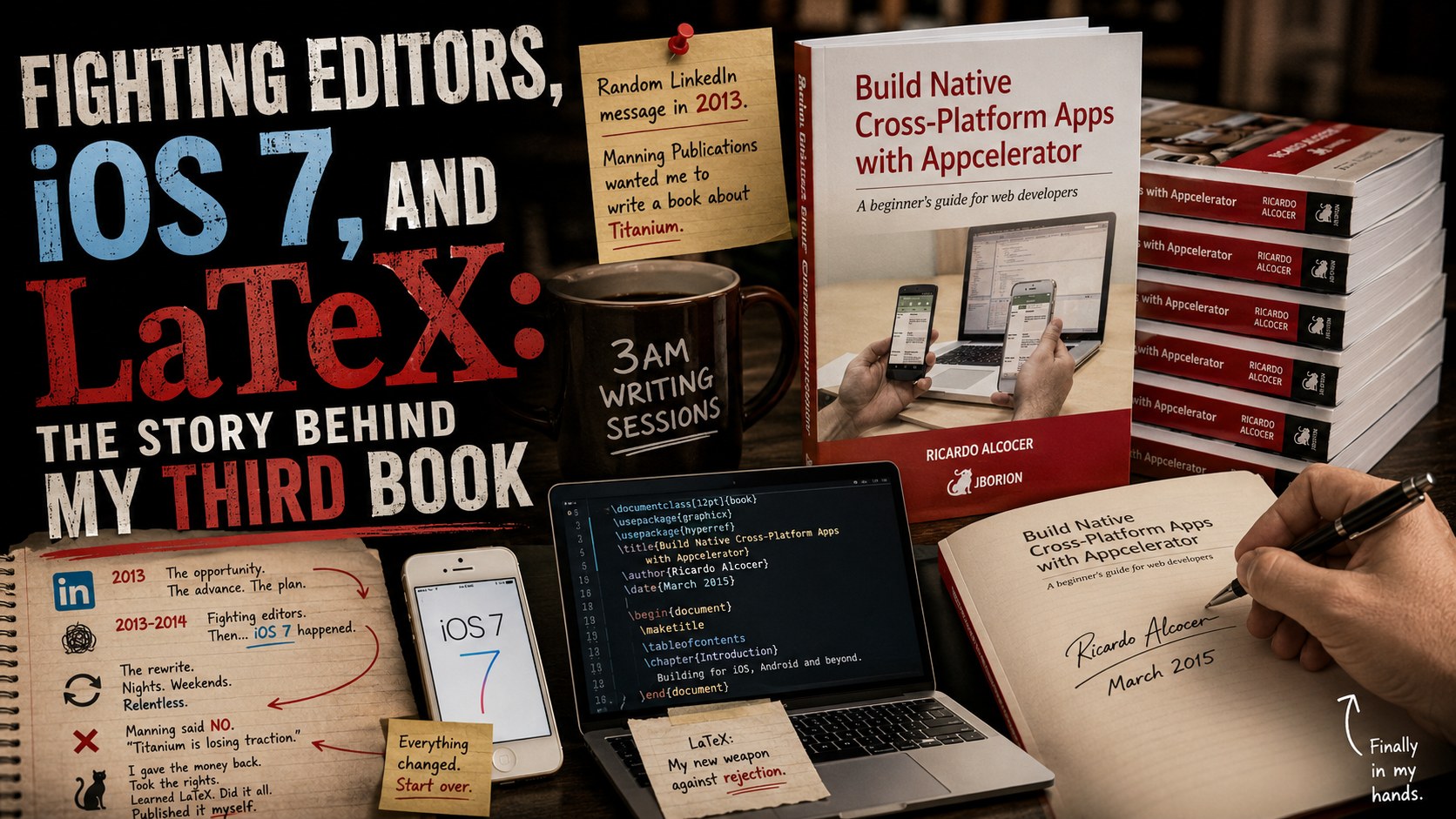
Back in 2013, while I was at Appcelerator, I got a random LinkedIn message. Manning Publications wanted me to write a book about Titanium.
That message hit me hard. I'd been deep in the Titanium world for four years at this time—running their developer relations efforts, teaching it, building with it, showing others how to push it to its limits. So when Manning came knocking, it felt like a sign: this is the next step. They were the real deal, a name that carried weight in the tech world. I pitched them a proposal with the book's table of contents, and they approved it. Just like that, I had an advance in hand and an editor assigned. I thought: okay, it's happening. I'm writing a Titanium book.
The First Stop
It didn't take long before things derailed. A few months in, my editor wasn't happy. As I remember it, he thought I was writing a highly technical book about Titanium, while I had pitched the book I believed should be written about it. I was asked to make the content more technical, but I pushed back. This was my book—and now we were at a full stop.
And then Apple dropped iOS 7. If you lived through that update, you know the pain. Everything looked different. Flat design, new icons, new UI rules. Overnight, every screenshot I'd taken for the book was useless. Code snippets that had worked now needed tweaks. Whole chapters had to be scrapped and rebuilt. It was like being told: Start over.
The Rewrite
Eventually Manning gave me a new editor, and together we rebuilt the book from the ground up. I spent nights re-taking screenshots, re-writing code, re-thinking how to explain things. It was months of heavy work—waking up at 3 a.m. to write until 6 a.m., and then starting my day. That was on weekdays. On weekends, I'd head to a nearby beer garden or Irish pub and spend a couple hours writing there. By mid-2014, the manuscript was finally done.
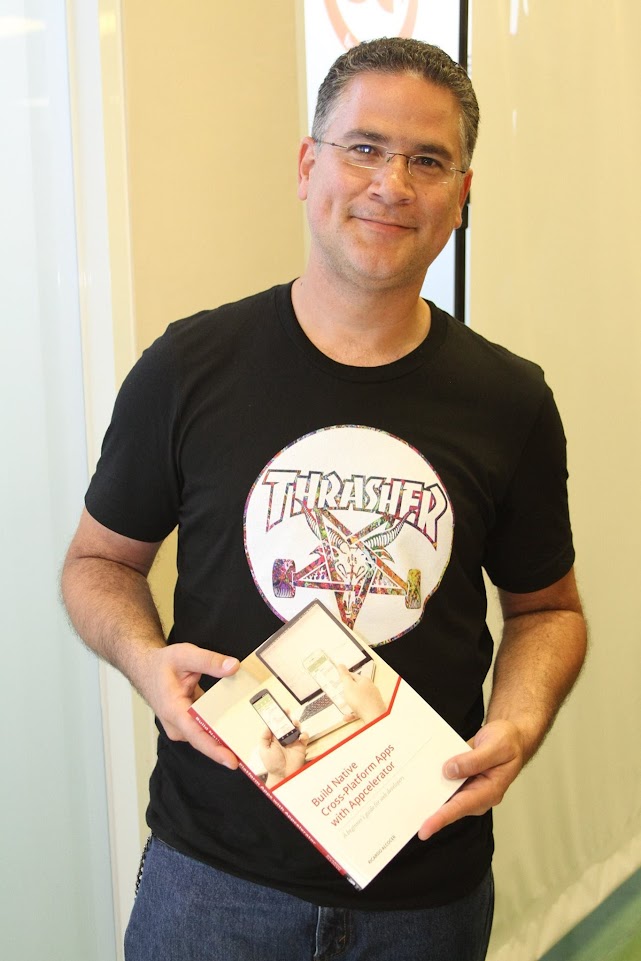
And then—boom. Another brick wall. Manning decided not to publish. Their reasoning was simple: "Titanium is losing traction."
But I knew something they didn't: the new Appcelerator platform was about to be released. Still, there was nothing I could do. They were out.
Owning It
So I made a decision. I gave Manning their money back and took the rights.
That meant I was on my own. No publisher, no production team, no safety net. If I wanted this book in the world, I'd have to make it happen myself. So I rolled up my sleeves, learned LaTeX to format and typeset the whole thing, and set up my own publisher name: JBOrion, after my two cats, Jack Bauer and Orion.
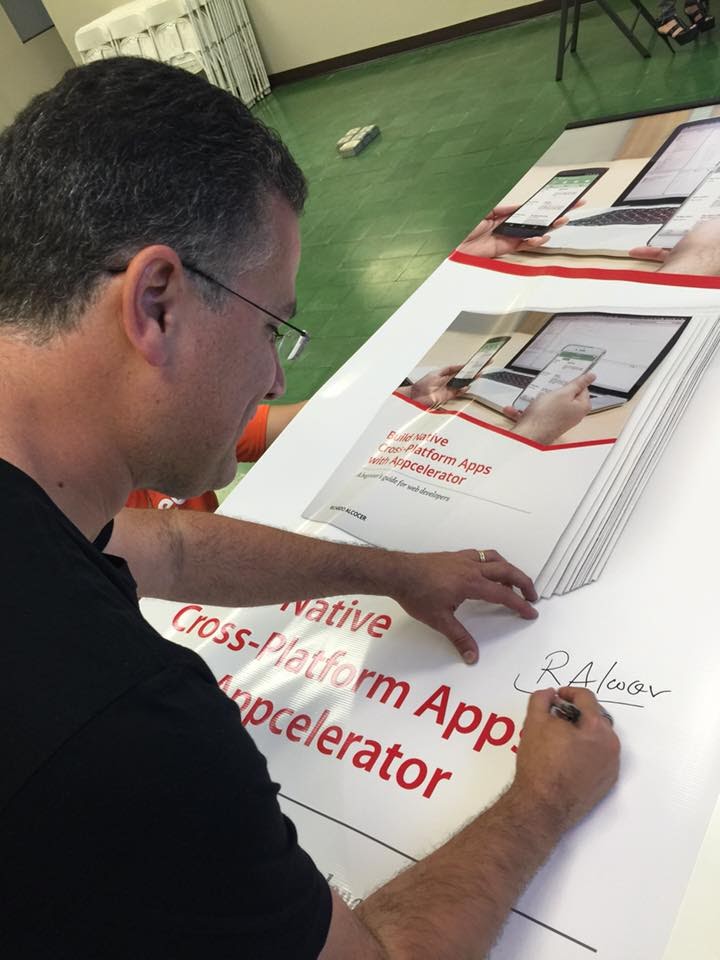
My friend Janice from Appcelerator took the cover photo—my own hands—and designed the cover to match Appcelerator's colors. The reason for that was simple: Appcelerator had verbally agreed to buy a number of copies and make it the official Appcelerator guide. But yeah, that didn't happen either.
March 2015
After all the detours, the rewrites, the rejections, the long nights of fighting LaTeX syntax before Claude Code was available, my book finally came out: Build Native Cross-Platform Apps with Appcelerator: A Beginner's Guide for Web Developers. Released in March 2015 under JBOrion. You can still find it on Amazon today—and surprisingly, ten years later I still sell a copy or two every so often.
A Decade Later
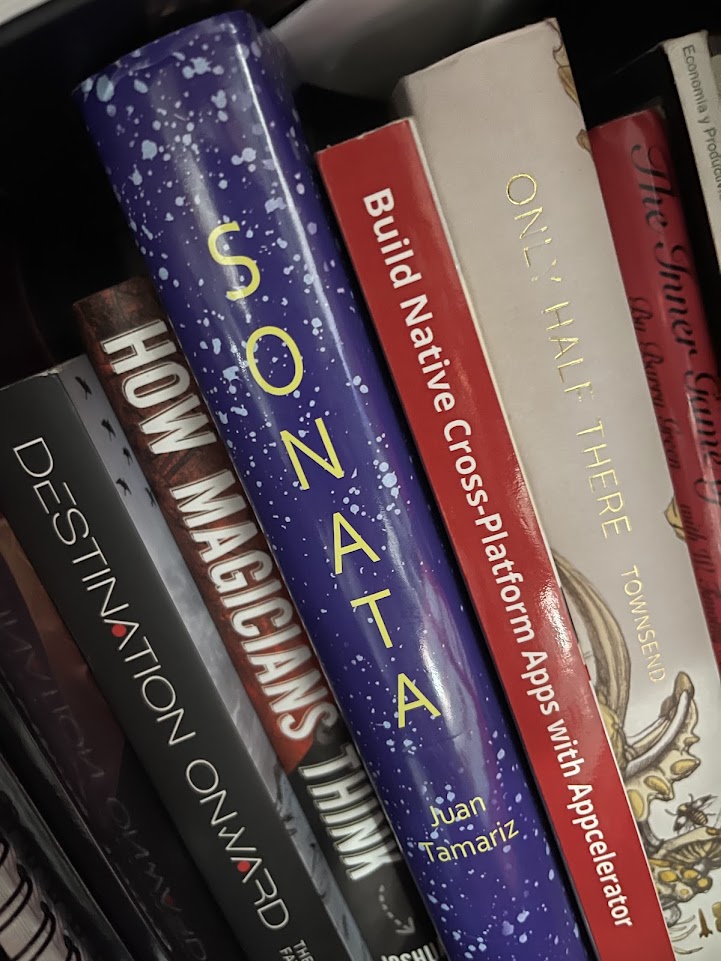
The book sits at a perfect 5-star average on Amazon. Eight verified-purchase reviews. One of them simply reads:
"Best Titanium book I have read. 10/10."
Strangers — years after Manning had moved on, years after Titanium itself faded from the conversation — found exactly what they came for inside pages I almost never finished writing.
The editors weren't wrong about the market. They were wrong about the reader.
What Stayed With Me
This book was never just about Titanium. It was about grit—about taking ownership of your work's value. By then, it was my third book, and the one I felt would have the greatest impact.
Here's what I carried from it:
- Publishers and editors can walk away. That doesn't mean you have to.
- Technology moves fast, but when you believe in an idea, you fight to see it through.
- Sometimes you need to bet on yourself, even if that means learning an entire publishing system from scratch.
That book didn't just document a development framework. It documented a moment in my life where I chose to own my work, no matter what. And that's why, to this day, it's one of the things I'm proudest of—not because of sales, but because of the story written between the lines.
Before this one, there was the CGI book from 1997 — my first.
The story didn't end there — years later I started another one.
Publishers aren't the only platforms that walk away from their creators.
📬 Enjoyed this article?
Subscribe for the stuff that doesn't make it onto the blog — half-finished ideas, what I'm reading and listening to, behind-the-scenes notes, and the occasional rabbit hole. No spam, just things worth your time.