I Bought a 500-Year-Old Lie Detector
A few weeks ago, I finally decided to buy something I'd been wanting for a while: The Discoverie of Witchcraft by Reginald Scot. This book is considered the first ever written about magic—though not in the way many might imagine.
Published in 1584, it's not a book of spells or incantations. Quite the opposite. It's a frontal critique of those ideas. Long before figures like James Randi or Penn & Teller existed, Scot was already questioning supernatural beliefs, at a time when saying such things could cost you your life. Having a copy—well, a modern reprint—isn't special because of its rarity, but because it represents an early form of critical thinking.
The book connects with two things that have always fascinated me: magic and skepticism. Scot doesn't just say that witchcraft doesn't exist—he explains how charlatans set up their tricks, and how many innocent people were accused and punished due to mistaken beliefs. His proposal is clear: understanding how things work is the best defense against fear and manipulation.
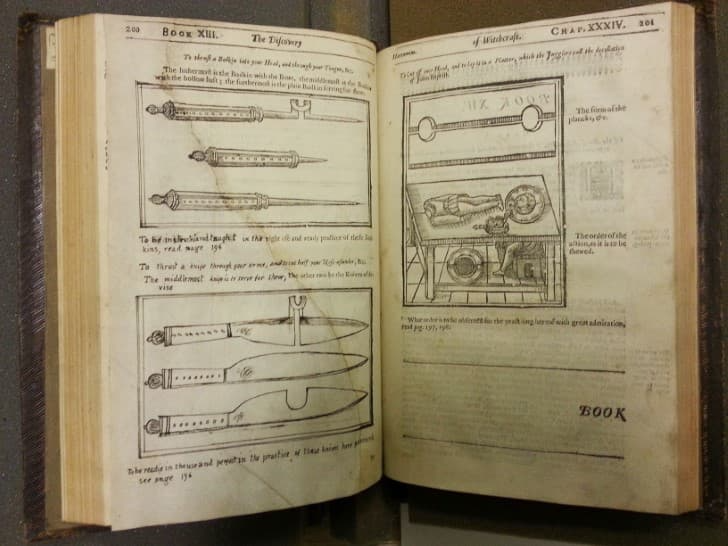 Credit: https://marcianosz.com/los-libros-que-marcaron-el-destino-de-las-brujas/
Along with the reading, I discovered a podcast with the same name: The Discoverie of Witchcraft. The hosts, Anthony and Byron, read the original text and comment with humor on Scot's arguments, as well as the atrocities committed by the Inquisition. It's biweekly, relaxed, and perfect for listening while you read.
I'm not reading this for any particular purpose. It's not for a new project, nor to prepare a magic routine. It's simply out of curiosity. A way to return to a voice that, in its time, dared to speak the truth when the safest thing was to remain silent.
And what strikes me most is the contrast.
And a Century Earlier
A century earlier, another book had been published that deeply marked European history: the Malleus Maleficarum—the Hammer of Witches.
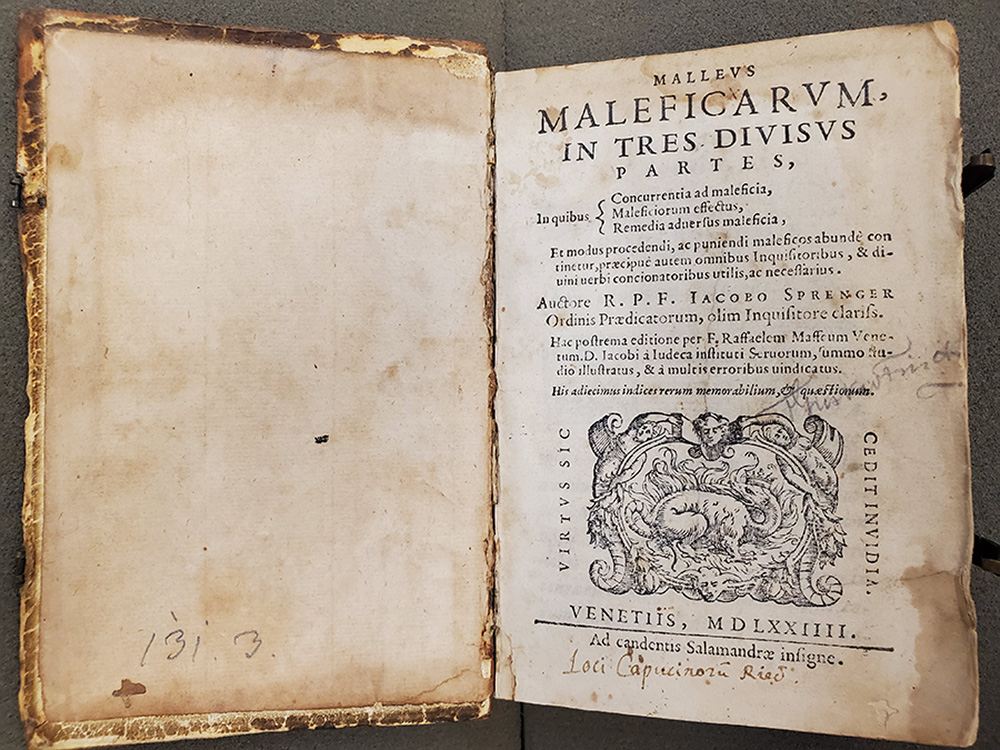 Credit: https://sociedadedospoetasamigos.blogspot.com/2024/04/o-malleus-maleficarum-ou-martelo-das.html?m=1
While Scot defended the accused and promoted reason, the Malleus was a guide to persecute and condemn, based on fear, fanaticism, and hatred toward women.
And one can't help but wonder: If Reginald Scot debunked these superstitions over 400 years ago... why do so many people still believe in them?
Perhaps the answer lies not in what we believe, but in how little we stop to question it.
Actually, the opposite is what sustains magic today — hiding the craft.
That same fascination eventually took me to Hollywood's Magic Castle.
A book from 1584 that still gets read says something curious about how works live through time.
📬 Enjoyed this article?
Subscribe for the stuff that doesn't make it onto the blog — half-finished ideas, what I'm reading and listening to, behind-the-scenes notes, and the occasional rabbit hole. No spam, just things worth your time.